Feeding the System: Nutrition Research & Dopamine

In previous posts, we looked at how dopamine is made, and what goes awry in Parkinson's Disease (PD), commonly considered a dopamine illness. This post uses that same scaffolding to ask a different question: what does the research actually support nutritionally at each stage?
Starting Material vs Support
One rule carries over from previous discussions: the I Love Lucy principle. If an enzyme is the bottleneck, more raw material doesn't help unless you were deficient. Even then, it will be limited. Cofactors are a different story, because they help the machinery itself.
Tyrosine: The Starting Material
Tyrosine comes from dietary protein, and your body can also make it from phenylalanine (another amino acid) via the enzyme phenylalanine hydroxylase. Adequate overall protein intake matters here, but keep in mind that tyrosine is so important, your body is evolved to be able to make it from another amino acid if needed. It is very unlikely to be deficient in tyrosine. Outright tyrosine deficiency essentially only shows up in extreme protein malnutrition or specific inborn errors of amino acid metabolism. These kinds of genetic mutations would have massive repercussions and would show up in infancy. So for the vast majority of people eating adequate protein, tyrosine deficiency isn't an issue.
Special Situations that Merit Tyrosine
The actual, well-supported research lies in the benefits of tyrosine supplementation during acute stress or cognitively demanding conditions. A systematic review found tyrosine loading acutely counteracts working memory and information-processing decrements specifically under demanding situational conditions, like cold exposure, extreme heat, or high cognitive load, but not under normal, unstressed conditions. A military-focused systematic review reached a similar conclusion: tyrosine or caffeine could reasonably be used to help sleep-deprived personnel maintain cognitive performance during demanding operations, a specific, narrow use case (stress-induced catecholamine depletion), not general cognitive enhancement.
There's a genetic wrinkle worth knowing too: one study found tyrosine supplementation only improved response inhibition in people with a specific dopamine D2 receptor genotype associated with lower baseline striatal dopamine, while it did nothing for people with the genotype associated with higher baseline dopamine. That's consistent with an "inverted-U" model of dopamine and cognition, where boosting dopamine helps people who are running low, and doesn't help (or could theoretically hurt) people who aren't.
There aren't direct tyrosine-supplementation trials in ADHD populations specifically. What actually is documented for ADHD is different: iron and zinc deficiency, not tyrosine. There's a specific, mechanistically clean case report of a child with documented iron deficiency and ADHD showing substantial symptom improvement after iron supplementation, with the reasoning explicitly resting on iron being tyrosine hydroxylase's cofactor, the same enzyme from your dopamine posts. Zinc deficiency has also been documented as more common in ADHD populations, correlating specifically with the inattentive subtype.
Tyrosine → L-DOPA: Supporting Cofactors
So if Tyrosine hydroxylase (TH) is the conveyer belt in I Love Lucy, who or rather, what is the equivalent of Lucy and Ethel. This enzyme is an iron-dependent enzyme. Iron sits directly in its active site; without adequate iron status, TH cannot function properly regardless of how much tyrosine is available.
TH also requires a cofactor called tetrahydrobiopterin (BH4), and this is where vitamin C earns a real, mechanistically specific role, not a general "antioxidants are good" hand-wave. Vitamin C (ascorbate) directly recycles BH4 back into its active form after each reaction cycle, and separately appears to boost tyrosine hydroxylase's own mRNA production. This isn't a modern wellness claim, it's decades-old, mechanistically clean biochemistry: ascorbate was shown to regenerate the BH4 cofactor and restart stalled hydroxylation reactions as far back as 1973.
There's a genuinely striking clinical illustration of what happens when this fails entirely: a documented case of scurvy (severe vitamin C deficiency) presenting as orthostatic hypotension, which resolved within 24 hours of vitamin C replacement, specifically because catecholamine synthesis (which includes dopamine) depends on ascorbate at this exact step. That's a dramatic, if extreme, demonstration that this cofactor relationship is real and clinically meaningful, not theoretical.
Practical takeaway: iron-rich foods (whether from animal sources like red meat and poultry, or plant sources like lentils and spinach, paired with vitamin C to aid absorption) and vitamin C-rich foods (citrus, bell peppers, broccoli, strawberries) both have a direct, specific mechanistic tie to this exact enzymatic step, not a generic "good for you" relationship.
L-DOPA → Dopamine: AADC's Vitamin B6 Dependency
As established in Part 2, AADC (the enzyme converting L-DOPA to dopamine) requires pyridoxal 5'-phosphate, the active form of vitamin B6, as its cofactor. Adequate B6 status supports this conversion step directly. For the average person, B6 plays a significant role in the biochemical synthesis of a number of neurotransmitters, which is partly why you see it in a lot of combination formulas.
It's worth restating from another post that caution should be used for those with Parkinson's as this cuts both ways for anyone on levodopa medication specifically. High-dose B6 supplementation can increase peripheral AADC activity (outside the brain), which is exactly why carbidopa is co-formulated with levodopa, to block that peripheral conversion so the medication reaches the brain intact. For someone on carbidopa-levodopa, food-level B6 intake isn't a concern, but this is not a step where "more is better" applies if you're managing PD medication.
Trafficking and Storage
Unfortunately, the evidence is thin here. In a previous post, we established VMAT2 as the vesicle-loading transporter and LRRK2 as the vesicle-trafficking machinery, both key players at this stage. The genetics here is a real causal lever. However, unfortunately, direct evidence for specific foods or nutrients meaningfully modulating VMAT2 expression or LRRK2 activity in humans is thin to nonexistent right now.
What is well supported, and connects directly to this stage: general mitochondrial and antioxidant support (i.e. housekeeping). This helps protect the storage system indirectly, since a well-buffered cell handles any dopamine that does leak from imperfect storage better than a cell already overwhelmed by oxidative stress.
Cellular Housekeeping
Glutathione is your body's primary antioxidant and it is running all the time in your mitochondria as you make ATP for energy. You may have heard of the MTHFR mutation, and this can lead you to not methylate well and as a result, not make glutathione well. This is beyond the scope of this blog, but it's worth noting that many of the mitochondrial support focused nutritional claims will focus on what your body needs to make glutathione, frequently advising pre-methylated B-vitamins to support the methylation pathways needed to make glutathione.
In previous posts on Parkinson's, we discussed DT-diaphorase and glutathione transferase are the enzymes that neutralize the reactive dopamine oxidation byproducts (quinones, aminochrome) before they cause mitochondrial and alpha-synuclein damage.
Supporting the body's glutathione system is where nutrition has a real, mechanistically direct role:
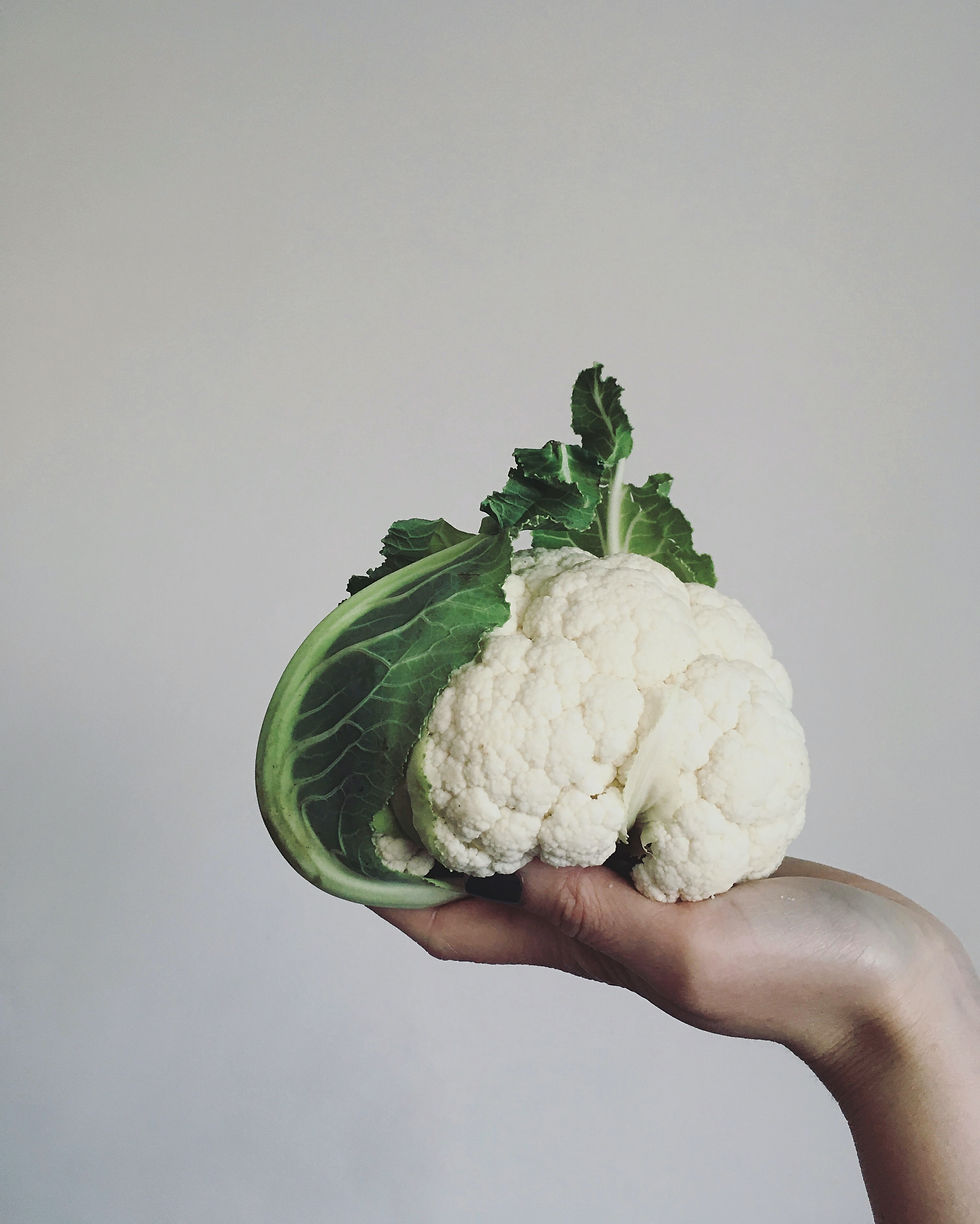
Cruciferous vegetables (broccoli, Brussels sprouts, cauliflower, kale) contain sulforaphane precursors, and sulforaphane has documented effects supporting glutathione production and antioxidant enzyme activity.
Sulfur-containing amino acids (found in eggs, garlic, onions, and adequate overall protein) provide the building blocks for glutathione synthesis itself.
One key takeaway here is KALE, because it's a wonderful source of B-vitamins and polyphenols as one of your green and leafy vegetables, but it's also a great source of sulfur-based compounds, which naturally lower inflammation.
Foods and the Big Inflammatory Targets
Top inflammatory mediators worth tracking: NF-κB (the master switch), TNF-α, IL-1β, and IL-6 (the cytokines it turns on), and the NLRP3 inflammasome (the bridge between alpha-synuclein pathology and cytokine release). These form a short list of heavy hitters in the realm of inflammation, and NF-κB is the master regulator.
Target NF-κB with these!
Garlic — sulfur compounds show documented immunomodulatory and NF-κB-related anti-inflammatory activity
Ginger — NF-κB inhibition is named as a documented mechanism in a review of human clinical trials specifically
Hawthorn — flavonoid extract directly inhibits NF-κB p65 activation and downstream inflammatory cytokines
Yes, Kale — its sulforaphane content directly blocks TLR4 receptor clustering, the step that would otherwise trigger NF-κB activation
Astragalus — astragalus polysaccharide inhibits NF-κB activation across numerous studies
Blueberries — anthocyanins specifically target NF-κB signaling in inflammation research
Raspberries — same anthocyanin/NF-κB mechanism as blueberries
Blackberries — same anthocyanin family, vascular and inflammatory pathway research
Get lots of color-rich fruits and veggies, and you'll be setting yourself up for success!
Let's look at some other foods!
Omega-3 fatty acids and the NLRP3 inflammasome specifically: this is one of the more mechanistically precise findings in this whole post. Omega-3 fatty acids activate specific receptors (GPR120 and GPR40) that directly inhibit NLRP3 inflammasome activation, not just a general anti-inflammatory effect, a specific receptor-mediated brake on the exact inflammasome complex discussed in Part 1.
Fatty fish (salmon, sardines, mackerel)
Walnuts
Flaxseed
Please note, that walnuts will have less omega-3s than fish, and anecdotally, I find a number of my patients struggle with flax, typically gas and bloating.
Sulforaphane and dietary phytochemicals more broadly: a review of dietary phytochemicals found consistent evidence for modulation of NLRP3 inflammasome assembly specifically in neurological disease contexts, reinforcing cruciferous vegetables' relevance beyond just the glutathione angle above, they appear to touch the inflammatory pathway too.
For my Parkinson's and ADHD folks who are looking to this post for nutritional dopamine support, it's worth noting that most of the foundational NLRP3-and-diet research comes from metabolic disease and cardiovascular contexts (obesity, diabetes, atherosclerosis) focused human trials. The mechanisms are real and the target (NLRP3) is the same one implicated in other posts on neuroinflammation, but the research for applications to other conditions is limited.
This is a good time to pause, because if you're aiming to keep up with the research and try the latest and greatest, this will come up a lot, and it came up for me when I was struggling with my health. If it were clear cut, it'd likely already be in the clinic room. Meaning, some of the early mechanistic research is just that-- early. It doesn't mean it can't be impactful, but you need to know when you're taking a leap. We saw with tyrosine supplementation that it can cause issues in PD. Part of why all the nutritional information is nested in mechanism is so you know what you're looking at when you look at these studies or advice columns. It's a cost benefit analysis.
Clean-up Crew = Autophagy
Your body recycles materials. Rather than keeping faulty cells, it breaks them down for parts and makes new ones. This is called autophagy. Autophagocytosis is another term you might see floating around. A key component of all healthy cells' ability to do this is the lysosome. Autophagy is a big topic in anti-aging, longevity conversations.
In PD, GBA1 mutations impair the lysosome's ability to clear old cellular debris, including misfolded alpha-synuclein, leading to Lewy body accumulation. This is a distinct process from dopamine handling, it's the cell's general waste-clearance system (autophagy), and there's real, if still largely preclinical for PD specifically, interest in dietary and lifestyle factors that support autophagy generally.
What's been shown to help autophagy? Giving your body some old school rest and stress.
Rest from Food: Time-Restricted Eating The standard research definition of time-restricted eating is an 8-10 hour daily eating window, so if you're aiming for roughly 10 hours, you're right in the well-studied range, not guessing. And the underlying mechanism has real teeth: caloric restriction and fasting are described as one of the strongest known non-genetic triggers for mitophagy, the specific autophagy process that clears out damaged mitochondria. Consider sleep part of your fasting window, and just stop eating a couple hours before bed.
Literal Rest: Sleep Sleep, fasting, and exercise aren't separate longevity strategies floating independently, they're recognized together in the research literature as a connected cluster of autophagy-relevant factors for healthy aging. None of them is doing this alone.
Little Rest from Your Rest: Exercise Exercise belongs in this same category because it activates AMPK and inhibits mTOR, the same signaling axis that fasting hits, which is part of why it's grouped alongside fasting and sleep as a shared autophagy-relevant stressor rather than treated as its own separate category.
Little Stress: Hot and Cold Shifts As well, we used to be a species that experienced temperature changes by way of being outside. Now, we only experience climate control. Both heat and cold exposure genuinely trigger autophagy at the cellular level, this isn't wellness folklore: heat shock reliably induces autophagy in neuronal cells specifically, and cold-water immersion in humans measurably increases autophagic activity, alongside heat shock protein activation.
With respect to temperature changes, work up some warmth in a workout and opt for a cool shower. Imagine you're living off the land, you wake up to forage for your food, you're experiencing regular movement, you're experiencing the heat of the day, you're sleeping in the cool breeze of night, and jumping into natural water sources when you get too hot. You have natural stressors and rests. Living in Texas, the natural heat makes people prone to heat stroke, and in Minnesota, you can die in the winter.
These don't have to be extremes. In fact, that same cold-exposure research that shows benefit also found a real dose-response cliff. Moderate cold stress increased protective autophagy. Higher-intensity cold stress pushed cells toward apoptosis instead, the opposite outcome. And older adults showed a blunted autophagic response at the same exposure levels that benefited younger people, with more apoptotic and inflammatory signaling showing up instead. So this isn't a "more stress is more autophagy" relationship. There's a real biological ceiling where the benefit reverses, and it's not the same ceiling for everyone.
My last thought I'll leave you with is that everything I listed, fasting → forage for food, tired → rest, hot → jump into cool. They are all stressors with a coupled experiential answer. We live under chronic stress, and our answer is "we manage" or "it's fine." Usually, it's because we think of unwinding for vacation and responsibilities as different from stress. How do you check out? How do you unwind? If it's doomscrolling, you've chosen overstimulation. Make unwinding the regularly occurring experiential answer.
Dr. Diane Stanley is a doctor of acupuncture and Chinese medicine. Blog content is for informational and educational purposes only and does not constitute medical advice, diagnosis, or treatment. Always consult a qualified healthcare provider before making changes to your health routine.
References
Hase, A., Jung, S. E., & aan het Rot, M. Behavioral and cognitive effects of tyrosine intake in healthy human adults. Pharmacology Biochemistry and Behavior, 133, 1-6 (2015). https://doi.org/10.1016/j.pbb.2015.03.008
Pomeroy, D., Tooley, K. L., Probert, B., et al. A Systematic Review of the Effect of Dietary Supplements on Cognitive Performance in Healthy Young Adults and Military Personnel. Nutrients, 12(2), 545 (2020). https://doi.org/10.3390/nu12020545
Aquili, L. The Role of Tryptophan and Tyrosine in Executive Function and Reward Processing. International Journal of Tryptophan Research, 13 (2020). https://doi.org/10.1177/1178646920964825
Iron supplementation in a young child with attention-deficit/hyperactivity disorder. New England Journal of Medicine, 352(15), 1607-1608 (2005). https://doi.org/10.1056/nejm200504143521521
Carr, A. C., Shaw, G. M., Fowler, A. A., & Natarajan, R. Ascorbate-dependent vasopressor synthesis: a rationale for vitamin C administration in severe sepsis and septic shock? Critical Care, 19(1) (2015). https://doi.org/10.1186/s13054-015-1131-2
Stone, K. J., & Townsley, B. H. The effect of L-ascorbate on catecholamine biosynthesis. Biochemical Journal, 131(3), 611-613 (1973). https://doi.org/10.1042/bj1310611
Zipursky, J. S., Alhashemi, A., & Juurlink, D. N. A rare presentation of an ancient disease: scurvy presenting as orthostatic hypotension. BMJ Case Reports, 2014. https://doi.org/10.1136/bcr-2013-201982
Immunomodulatory Effects of Glutathione, Garlic Derivatives, and Hydrogen Sulfide. Nutrients, 11(2), 295 (2019). https://doi.org/10.3390/nu11020295
Clinical trials on pain lowering effect of ginger: A narrative review. Phytotherapy Research, 2020. https://doi.org/10.1002/ptr.6730
Liu, F., Zhang, X., Ji, Y. S., et al. Total Flavonoid Extract from Hawthorn (Crataegus pinnatifida) Improves Inflammatory Cytokines-Evoked Epithelial Barrier Deficit. Medical Science Monitor, 26 (2020). https://doi.org/10.12659/msm.920170
Youn, H. S., et al. Sulforaphane Suppresses Oligomerization of TLR4 in a Thiol-Dependent Manner. Journal of Immunology, 182(10) (2009). https://doi.org/10.4049/jimmunol.0803988
Zheng, Y., Ren, W., Zhang, L., et al. A Review of the Pharmacological Action of Astragalus Polysaccharide. Frontiers in Pharmacology, 11 (2020). https://doi.org/10.3389/fphar.2020.00349
The Benefits of Anthocyanins against Obesity-Induced Inflammation. Biomolecules, 12(6), 852 (2022). https://doi.org/10.3390/biom12060852
Berries as a Treatment for Obesity-Induced Inflammation: Evidence from Preclinical Models. Nutrients, 13(2), 334 (2021). https://doi.org/10.3390/nu13020334
Potential Benefits of Berry Anthocyanins on Vascular Function. Molecular Nutrition & Food Research, 65 (2021). https://doi.org/10.1002/mnfr.202100170
Camell, C. D., Goldberg, E. L., & Dixit, V. D. Regulation of Nlrp3 inflammasome by dietary metabolites. Seminars in Immunology, 27(5), 334-342 (2015). https://doi.org/10.1016/j.smim.2015.10.004
Hung, W-L., Ho, C-T., & Pan, M-H. Targeting the NLRP3 Inflammasome in Neuroinflammation: Health Promoting Effects of Dietary Phytochemicals in Neurological Disorders. Molecular Nutrition & Food Research, 64(4) (2019). https://doi.org/10.1002/mnfr.201900550
Time Restricted Eating: A Dietary Strategy to Prevent and Treat Metabolic Disturbances. Frontiers in Endocrinology, 12 (2021). https://doi.org/10.3389/fendo.2021.683140
The effect of fasting or calorie restriction on mitophagy induction: a literature review. Journal of Cachexia, Sarcopenia and Muscle, 2020. https://doi.org/10.1002/jcsm.12611
Min, S., Mašanović, B., & Bu, T. The Association Between Regular Physical Exercise, Sleep Patterns, Fasting, and Autophagy for Healthy Longevity and Well-Being: A Narrative Review. Frontiers in Psychology, 12 (2021). https://doi.org/10.3389/fpsyg.2021.803421
Bhadauriya, P., Onkar, A., & Nagarajan, K. Glycogen synthase is required for heat shock-mediated autophagy induction in neuronal cells. Biology Open, 14(2) (2025). https://doi.org/10.1242/bio.061605
King, K. E., McCormick, J. J., & Kenny, G. P. Temperature-Dependent Relationship of Autophagy and Apoptotic Signaling During Cold-Water Immersion in Young and Older Males. Advanced Biology, 8(3) (2023). https://doi.org/10.1002/adbi.202300560


Comments